Bloating and Water Retention Before Your Period: What's Going On
Why drinking more can paradoxically ease premenstrual puffiness, how sodium and gentle movement fit in, and when bloat is worth checking out.
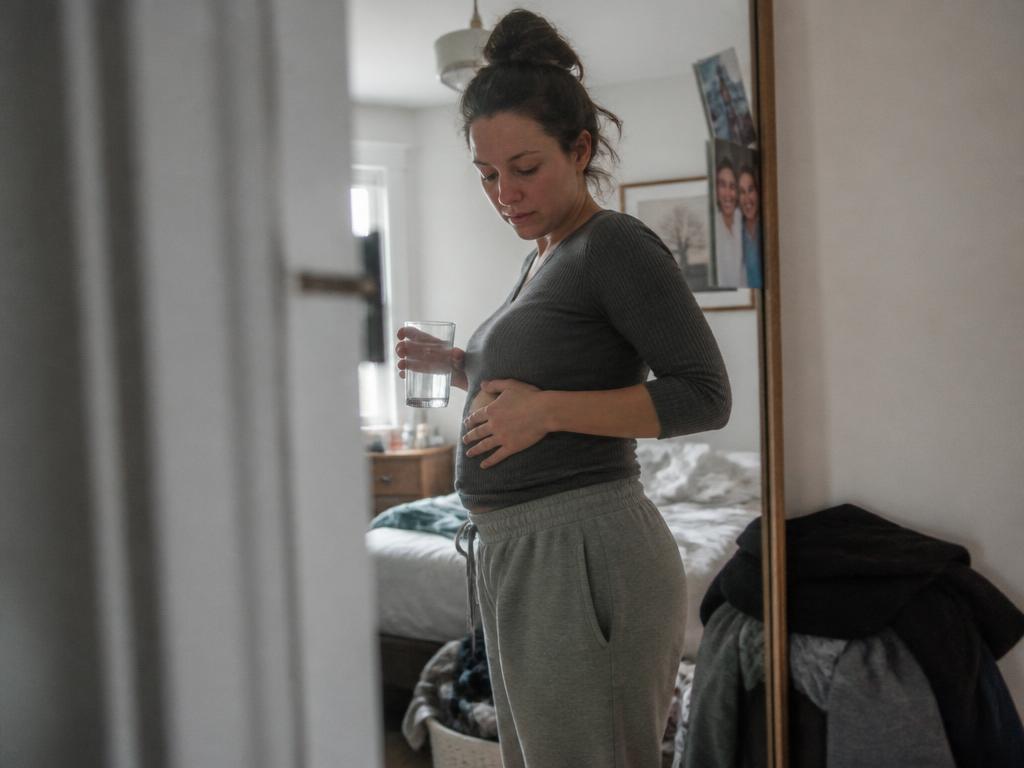
The premenstrual puff is one of the most relatable parts of having a cycle: the waistband that suddenly fits differently, the rings that won’t budge, the scale creeping up for no obvious reason. Here is what is actually happening — and why drinking less is rarely the fix.
The hormonal mechanics of PMS bloat
In the days before your period, you are in the luteal phase, when progesterone has risen and, if no pregnancy occurs, both progesterone and estrogen begin dropping toward menstruation. These hormonal shifts influence how your body handles sodium and water, and for many women the net effect is temporary fluid retention.
There are usually two overlapping things going on:
- Water retention. Hormonal changes prompt the body to hold extra fluid, which shows up as a puffy, swollen feeling and a small bump on the scale.
- Digestive bloat. The same hormonal shifts can slow gut motility, leaving you gassier and more distended. So “bloat” before a period is often part fluid, part digestion.
The reassuring part: this is a normal, cyclical pattern, and it typically resolves on its own once your period starts and hormones reset. It is uncomfortable, not a sign that something is broken.
Sodium balance and gentle movement
This is where the counterintuitive truth lives: when you feel puffy, cutting fluids usually makes it worse, not better. If you under-drink, your body tends to cling to the water it has. Staying hydrated signals that fluid is plentiful and there is no need to hoard it.
What tends to actually help:
- Keep drinking normally. Steady hydration is on your side here, not against you.
- Ease back on very salty food. Sodium pulls water along with it, so a stretch of heavily salted, processed meals can amplify the swelling. You do not need to fear salt — just notice if your premenstrual days are also your saltiest.
- Lean on potassium-rich foods. Fruit and vegetables that supply potassium help balance sodium’s water-holding effect.
- Move gently. A walk, a swim, light movement — anything that gets you circulating can help fluid redistribute and ease the stagnant, swollen feeling.
- Be patient with the scale. A few pounds of premenstrual water weight is not fat and is not permanent. It tends to vanish within days.
The theme is balance and circulation, not restriction. You are nudging your body, not punishing it.
Separating normal from worth-checking
Most premenstrual bloating is ordinary and self-limiting. But “normal” has edges, and it is worth knowing roughly where they are so you can tell when to simply ride it out and when to get a professional’s eyes on it.
| Usually ordinary | Worth raising with your clinician |
|---|---|
| Puffiness and bloat in the days before your period | Bloating that is severe, painful, or constant |
| A small, temporary scale bump | Swelling that doesn’t resolve after your period |
| Mild gut changes that settle | Symptoms that disrupt your daily life |
| A familiar, repeating pattern | A sudden change from your usual pattern |
Bloating that is severe, persistent beyond your period, sharply painful, or newly different from your long-standing norm is the kind of thing to mention to your own clinician rather than wait out. Premenstrual symptoms that genuinely interfere with your work, sleep, or mood also deserve a conversation — feeling wrecked every month is common, but it is not something you simply have to accept.
The bottom line
Premenstrual bloat is mostly hormone-driven fluid retention plus some digestive sluggishness, and it usually clears once your period begins. The instinct to drink less is exactly backwards: staying hydrated, going lighter on salt, eating your potassium, and moving gently tend to ease the puffiness better than restriction. Know your own pattern — and if the bloating turns severe, lingers past your period, or suddenly changes, bring it to your clinician.