
Are Electrolytes Safe During Pregnancy?
A calm, evidence-aware look at electrolyte mixes in pregnancy: what's in them, when extra hydration plausibly helps, and what to bring to your OB or midwife.
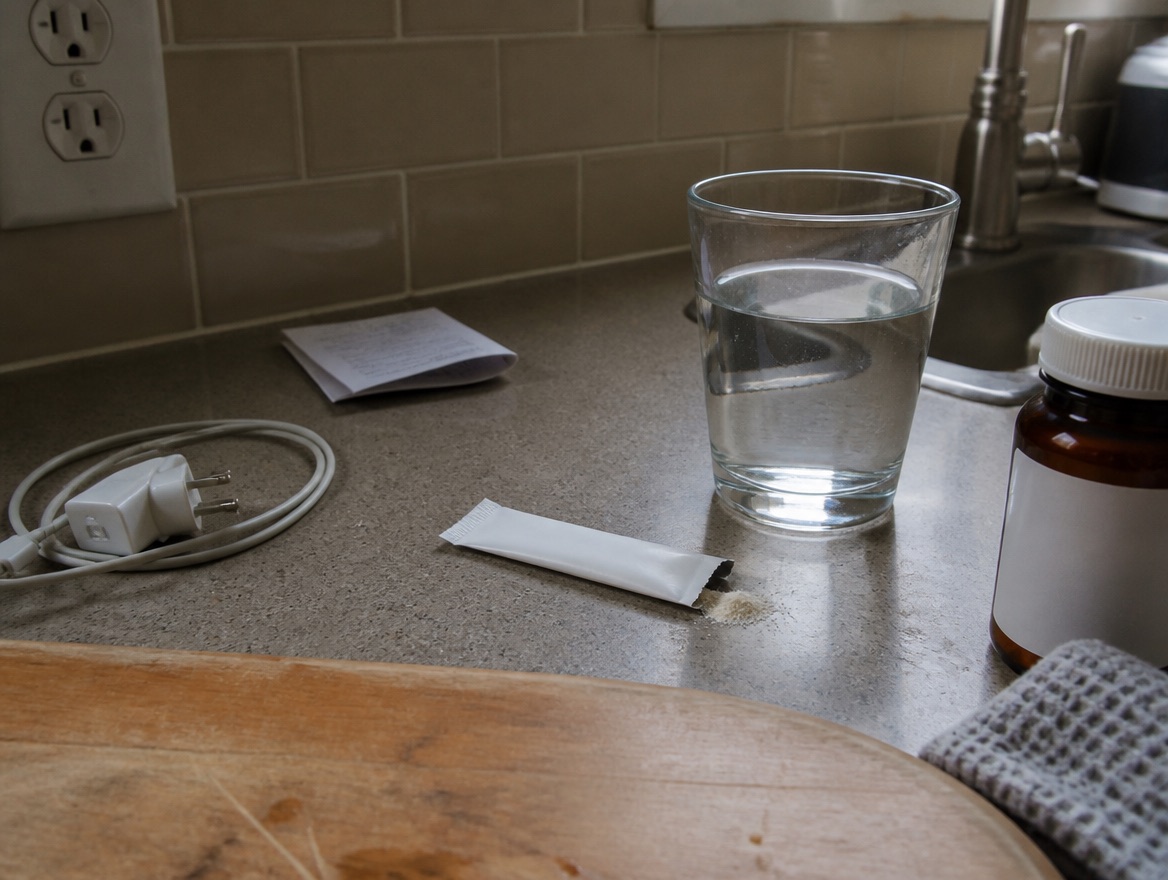
The question is showing up in a lot of inboxes lately: a friend is pregnant, the morning sickness is bad, and someone in a group chat suggested an electrolyte stick pack. Is that fine? Is it the same as a sports drink, which feels like it should be a bad idea, but maybe is not?
Electrolyte mixes have moved from the gym bag to the kitchen counter, and pregnancy is the place where that shift makes people most uncertain. For most healthy pregnancies, a thoughtfully chosen electrolyte drink is not the high-stakes decision the internet sometimes makes it out to be — but it is also not a decision to make in a vacuum. The evidence base in pregnancy is thin for most consumer mixes, and the right call depends on your specific situation, which is what your obstetrician or midwife is for.
What’s actually in a typical electrolyte mix
The panel on most powders and stick packs is short. Knowing what each ingredient does in a pregnant body is most of the work.
- Sodium. The headline electrolyte in almost every mix. Sodium is essential in pregnancy, and the long-standing advice to “restrict salt” has been quietly walked back in mainstream obstetrics for years. For most healthy pregnant women, current guidance leans toward salting food normally and staying hydrated rather than chasing or restricting sodium — though anyone with high blood pressure, preeclampsia history, or kidney issues should defer to their clinician on a specific target.
- Potassium. Important for blood pressure regulation and muscle function. The amounts in consumer mixes are modest compared with what’s in food (a banana, a potato, a cup of beans). Generally uncomplicated unless you have a kidney condition or take medication that affects potassium — both worth flagging with your clinician.
- Magnesium. Frequently used in pregnancy for sleep, leg cramps, and constipation, often under clinician guidance. High doses can cause loose stools. Magnesium is one of the ingredients most worth confirming a dose for with your provider, especially if your prenatal already contains some.
- Sweeteners. Stevia and monk fruit are generally considered acceptable in pregnancy. Sucralose has more mixed coverage but is widely used. Aspartame is generally considered acceptable for most pregnant women but is contraindicated in phenylketonuria (PKU). Added sugar and dextrose are not flagged as risks at typical serving sizes, but a high-sugar serving on top of a normal day adds up — worth raising with your clinician if gestational diabetes is on the radar.
- B vitamins. Usually unremarkable in pregnancy, but worth checking that you are not stacking with a prenatal that already covers them.
- Caffeine. Some mixes contain it, often as part of an “energy” or “hydration plus” line. Mainstream guidance caps caffeine in pregnancy at roughly 200 mg per day. A caffeinated mix has to fit inside that ceiling alongside any coffee or tea you are already drinking.
The short version: the core electrolytes in most mixes are not the part to worry about. The places where pregnancy-specific judgment is needed are caffeine, herbal blends, and stacking with whatever else is in your routine.
When extra fluids and electrolytes plausibly help
There are a few real situations in pregnancy where targeted hydration earns its place. None of them are reasons to start a daily mix on your own without a conversation, but they are the most common reasons clinicians will green-light one.
Morning sickness with vomiting. First-trimester nausea that includes any vomiting drains fluid and electrolytes fast. Many OBs and midwives will suggest sipping an oral rehydration-style drink — sometimes a clinical formulation, sometimes a consumer mix — to stay ahead of dehydration. If you cannot keep fluids down for more than a day, that crosses into territory that needs medical attention.
Hot weather, late pregnancy. Blood volume is already up by the third trimester, and heat tolerance is down. A long walk in summer, a humid afternoon outdoors, or travel in a warm climate are reasonable contexts to add a serving of electrolytes rather than only water.
Exercise. If you were active going into pregnancy and are continuing to train with your clinician’s sign-off, the usual sweat-replacement logic still applies.
Postpartum, briefly. The first days after birth — especially with breastfeeding established — are a separate hydration moment that often gets overlooked. Worth mentioning to your clinician on the way out.
What’s worth checking on the label
Once you have decided, with your provider, that a mix is reasonable for you, the label is where the actual decision gets made. A few things to look at:
| Ingredient or feature | Pregnancy-relevant note |
|---|---|
| Sodium per serving | Useful in context. Aim for steady, not maximal. |
| Caffeine | Counts against the daily ceiling. Confirm the milligrams per serving. |
| Added sugar / dextrose | Not unsafe, but stacks on normal intake. Relevant for gestational diabetes. |
| Herbal blends | The place to slow down. Some herbs are contraindicated in pregnancy. Ask about any blend you don’t recognize. |
| Artificial sweeteners | Most are considered acceptable; aspartame is off-limits with PKU. Stevia and monk fruit are the least contested. |
| Serving size | Read the actual serving. Some packs are designed for a half-serving. |
| ”Pregnancy-safe” claims | Not a regulated phrase. Treat as marketing, not endorsement. |
If a product avoids listing milligrams clearly, that is itself information.
When to call your clinician
A few patterns are not “drink more electrolytes” problems. They are “call your provider” problems:
- You cannot keep fluids down for more than a day, or you are vomiting repeatedly.
- You feel dizzy or lightheaded when you stand, and it does not improve with rest and fluids.
- Your urine is dark and stays dark even after a few hours of steady drinking.
- You are losing weight in the first trimester rather than holding steady.
- Your nausea pattern is severe enough to fit what your clinician might call hyperemesis — that has its own treatment path and is not something to manage with a stick pack.
None of these are failures. They are signals, and pregnancy is the right time to use them.
The bottom line
For most healthy pregnancies, a thoughtfully chosen electrolyte mix is not the high-stakes choice it can feel like online, and it is also not a daily requirement. The core electrolytes are rarely the issue at typical doses; the places to look twice are caffeine, herbal add-ins, and how a serving fits the rest of your day. Bring the label to your next appointment and let your OB or midwife weigh in on your specific situation. That conversation is the part that turns a general answer into the right answer for you.