Luteal Phase Hydration: Why the Week Before Your Period Feels Different
Progesterone shifts thirst, body temperature, and fluid retention in the back half of the cycle. A plain-language read on what changes and how to drink around it.
If the week before your period feels different from the rest of the month — warmer, puffier, somehow thirstier and somehow more swollen at the same time — there is real physiology behind it. The second half of the menstrual cycle, called the luteal phase, runs from ovulation to the start of bleeding, and it changes how your body handles fluid in small but noticeable ways.
None of it is a problem to be solved with willpower. It is a phase to drink around, and a few small adjustments tend to make the days leading up to a period quieter.
What progesterone is doing
After ovulation, progesterone rises and becomes the dominant hormone for roughly the next two weeks. It is the hormone of “maintaining a possible pregnancy,” and its effects on the rest of the body are easy to overlook because we mostly talk about it in fertility terms.
Three of its everyday effects matter for hydration:
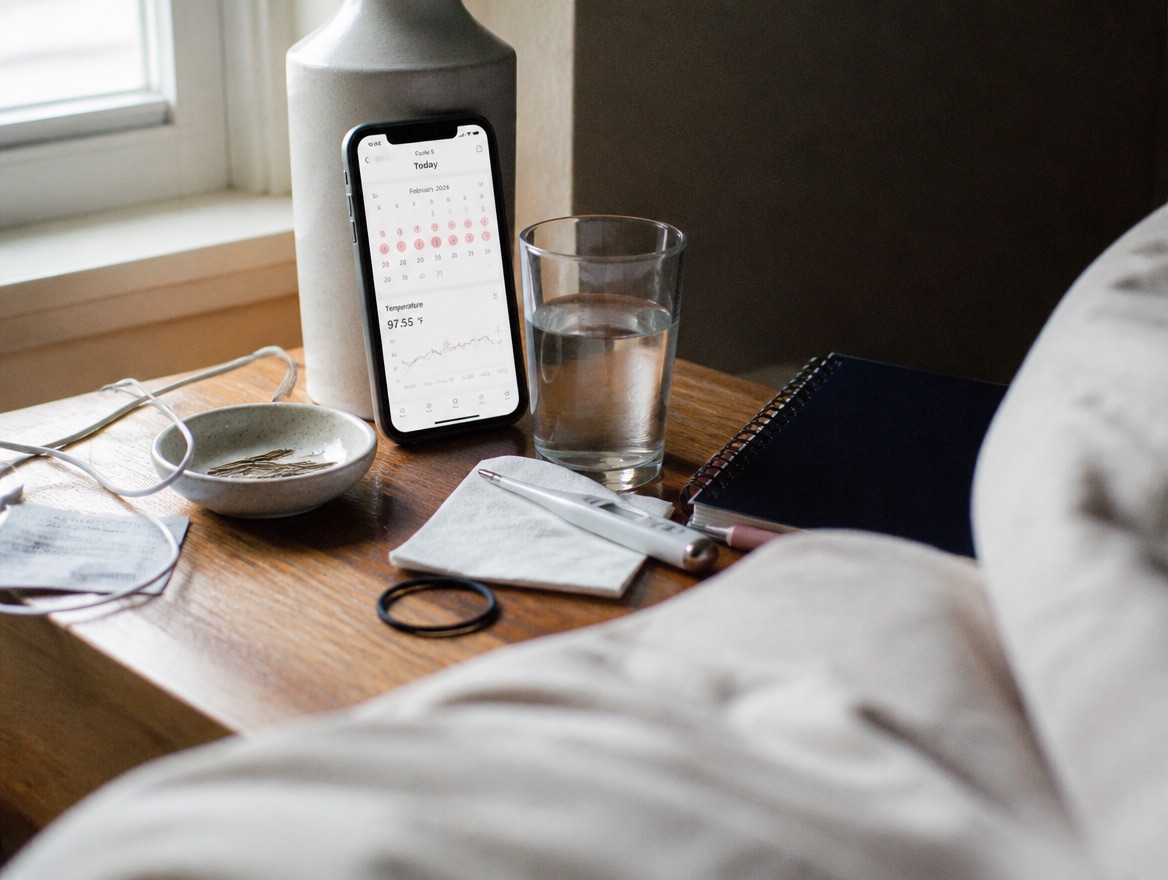
- A slightly higher baseline body temperature. Resting temperature ticks up by a few tenths of a degree after ovulation and stays there until your period starts. The body is running a touch warmer, so insensible losses through skin and breath are a touch higher.
- Shifts in thirst signalling. Progesterone interacts with the hormones that regulate thirst and water retention. Some women notice they are thirstier in the luteal phase; others notice the opposite, where thirst dulls but bloating climbs.
- More fluid retention, especially in the days before bleeding. This is the puffiness many women feel in their fingers, breasts, lower belly, and ankles in the late luteal phase. It is real, it is not a sign you are doing anything wrong, and counterintuitively it is not fixed by drinking less water.
The combination — warmer body, sometimes-muddled thirst signal, more retention — is why the luteal phase can feel both thirstier and more bloated at once. Both can be true.
Why drinking less makes bloating worse
The instinct, when your rings feel tight and your jeans feel snug, is often to back off on water. It almost always backfires.
When you under-drink, your body responds by holding onto sodium and water more tightly, not less. The kidneys interpret low fluid intake as a reason to conserve. The bloating you were trying to reduce gets a little worse, and you add a baseline of mild dehydration on top.
The same goes for the late-cycle craving for salty foods. Heavy sodium swings on a day of low fluid intake tend to amplify the retention, not relieve it. A steadier pattern — drinking to thirst, salting food normally rather than chasing or restricting it — usually rides through the days better than any aggressive correction.
This is one of the few times where the right answer is genuinely the boring one: keep drinking, keep eating, and let the phase pass.
A simple luteal-week adjustment
You do not need a hydration protocol. A small handful of habits, applied loosely across the back half of the cycle, tend to be enough.
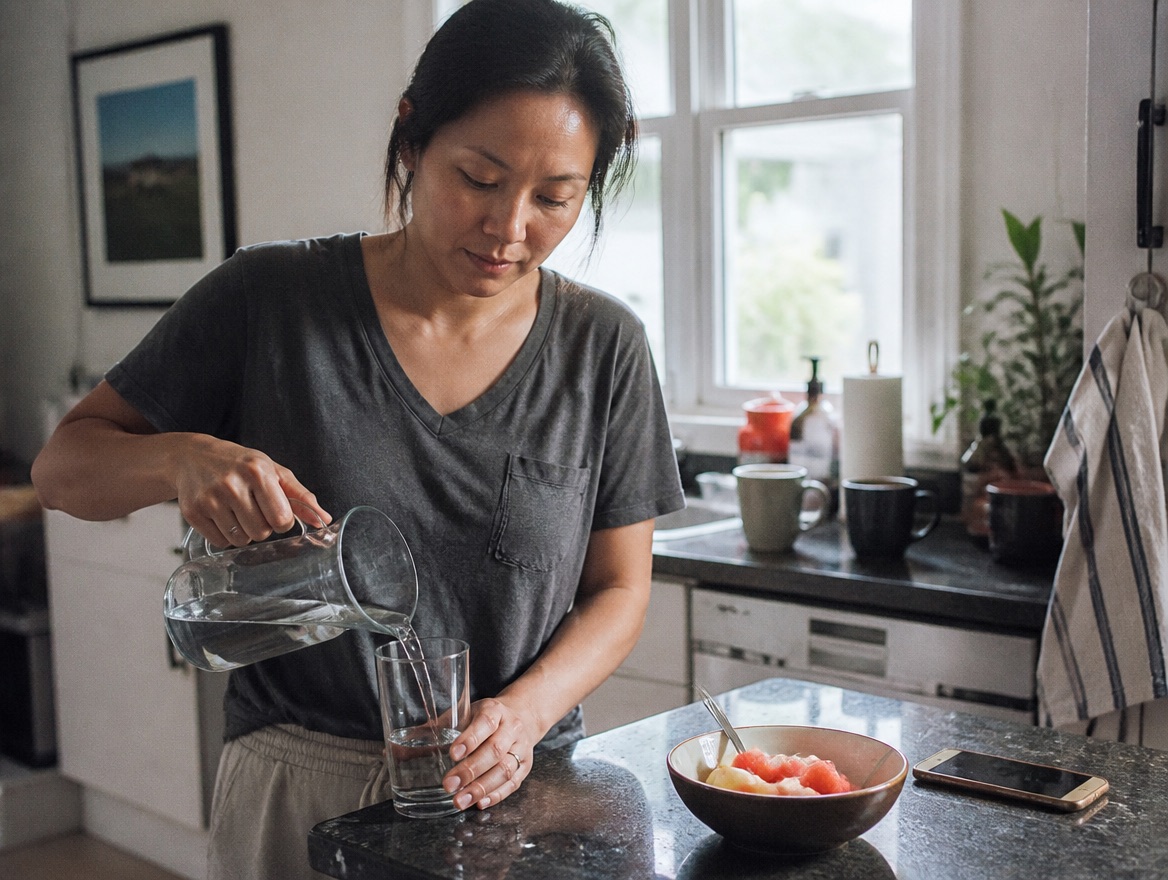
- Anchor a glass of water to two daily moments. Most often: with your morning routine and with your evening wind-down. Two non-negotiable glasses give you a floor on the days thirst is blunted.
- Treat the early-luteal warm-up as a real signal. When body temperature notches up after ovulation, your need for fluid notches up a little too. A bit more, not a lot more.
- Keep sodium steady, not strict. Salting food the way you normally would is fine. The luteal phase is a poor time to either crash-restrict or overload sodium.
- Watch caffeine and alcohol around the late luteal phase. Both can sharpen bloating and disrupt sleep in a phase where both are already on edge.
- Sip warm fluids in the last few days. Herbal teas and broths give you fluid without the cold-drink reflex some women find aggravates cramping at the very end of the cycle.
Many women find that one or two of these matter for them and the others do not. The point is not to follow all five, but to notice which lever your body responds to.
What “normal” actually looks like across the cycle
It helps to know the rough rhythm so the luteal week feels less like a problem and more like an expected stretch of the month.
| Cycle phase | Roughly | Hydration character |
|---|---|---|
| Menstrual | Days 1–5 | Fluid loss from bleeding; some women feel thirsty, others flat. Salt and warm fluids tend to soothe. |
| Follicular | Days 6–13 | Estrogen rising; temperature lower; many women feel the “easiest” hydration of the month here. |
| Ovulatory | Days 12–16 | Thirst can spike for a couple of days around ovulation. |
| Luteal | Days 15–28 | Progesterone dominant; body slightly warmer, retention up, thirst signals can be uneven. |
Day numbers are illustrative; your cycle is your cycle. Cycle-tracking apps can be a useful overlay because the phase, more than the calendar date, is what changes how you feel.
When the luteal-week pattern is worth a conversation
For most women, luteal-phase puffiness and shifting thirst are an expected part of the cycle. They come, they pass, the period starts, and within a day or two things ease.
A few patterns are worth raising with a clinician rather than chalking up to “just PMS”:
- Bloating that is severe enough to disrupt your work or sleep every cycle.
- Sudden, marked weight swings around the period that feel different from your usual rhythm.
- Headaches, dizziness, or fainting that cluster reliably in the late luteal phase.
- A new pattern that arrives in your thirties or forties — perimenopause can change how the luteal phase feels well before periods become irregular.
A good clinician will not dismiss late-cycle symptoms as imagined. If yours does, that itself is a reason to seek a second opinion.
The bottom line
The luteal phase changes how your body handles fluid in small, real ways: a slightly warmer baseline, shifting thirst signals, and more retention in the days before your period. The fix is not less water — that almost always makes the bloating worse. Anchor a couple of daily glasses, keep sodium steady, lean on warm fluids in the last few days, and let the phase do its thing. Most cycles, that is enough.