Staying Hydrated at a Desk Job When You Forget to Drink
How to build water into a sedentary day without thinking about it, using habit-stacking, visual cues, and hydrating foods within arm's reach.

A desk can be a hydration black hole. You sit down, you get absorbed, and three hours later you realise you have not had a drop. The fix is not willpower — it is wiring water into your day so it happens without you having to remember.
Habit-stacking your sips
The most reliable way to drink more is to attach drinking to things you already do. This is “habit-stacking”: piggybacking a new behaviour onto an existing, automatic one, so the old habit becomes the reminder.
Some easy pairings for a working day:
- Every time you check email or join a call, take a few sips first.
- With each bathroom trip, refill your glass or bottle on the way back.
- At the top of each hour, or whenever a regular notification fires, drink a little.
- Before every coffee or tea, have some water — pairing the two means your caffeine habit drags hydration along with it.
The beauty of stacking is that you are not trying to remember a brand-new task. You are borrowing the reliability of something you already do dozens of times a day. Pick one or two pairings that fit your routine and let them run on autopilot rather than overhauling everything at once.
Visual cues and routines
Out of sight really is out of mind with hydration. A glass tucked in a drawer gets forgotten; one sitting in your eyeline gets sipped. Engineering your environment does a lot of the work for you.
Cues and routines that help:
- Keep water visible and within reach. A bottle or glass on the desk, in front of you, is the single biggest nudge.
- Use a bigger vessel. Refilling less often means fewer chances to forget, and seeing how much is left gives you feedback.
- Anchor refills to natural breaks. Tie a top-up to lunch, the start of the afternoon, or the end of a meeting block so it becomes routine.
- Front-load when you are forgetful. If afternoons are your blind spot, lean a little more on morning hydration when you are more on top of things.
| Cue | How it helps |
|---|---|
| Bottle in your eyeline | Constant gentle reminder |
| Larger vessel | Fewer refills, visible progress |
| Refill at set break points | Builds a routine you do not have to think about |
| Drink with each coffee | Hitches hydration to an existing habit |
A small note on not overdoing it: the goal is steady, sensible intake across the day, not chugging to hit a number. You are smoothing out a forgetful pattern, not racing a quota.
Hydrating foods at your desk
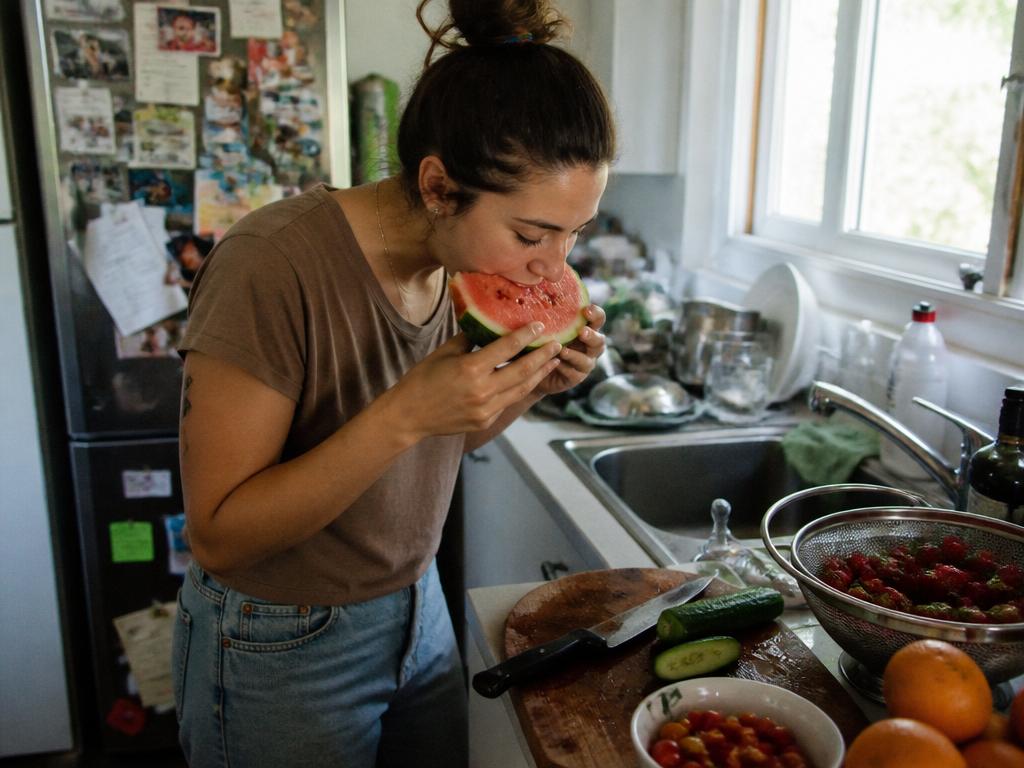
Your fluid does not all have to come through a straw. A meaningful share of hydration can arrive as food, which is perfect for a desk day where snacking happens anyway.
Desk-friendly, water-rich options:
- Crunchy produce like cucumber, celery, cherry tomatoes, and bell pepper strips.
- Fruit such as orange segments, berries, melon, or grapes.
- Yoghurt as a snack with plenty of moisture and some minerals.
- A broth-based soup at lunch, which is almost entirely fluid.
These do double duty: they add to your fluid total and tend to be the kind of snacks that leave you steadier than a dry, salty packet. Keeping a couple of these within arm’s reach means you hydrate a little every time you graze.
A few closing thoughts:
- Pattern beats perfection. A handful of reliable cues will do more than an ambitious plan you abandon by Tuesday.
- Read your own signals. Energy, focus, and urine colour tell you whether your system is working.
- Mind midlife and your cycle. Needs can shift in perimenopause and across the month, so revisit your setup if your old habits stop keeping up.
The bottom line
Staying hydrated at a desk is about design, not discipline: stack sips onto things you already do, keep water visible in a larger vessel, and tie refills to natural breaks so it runs on autopilot. Let water-rich snacks at your desk quietly add to the total. Aim for steady intake rather than a quota, watch your own energy and urine cues, and adjust your setup as your needs shift with your cycle or midlife.