Eating Your Water: High-Hydration Foods for Busy Days
How produce and other water-rich foods quietly cover much of your fluid needs, roughly how much they contribute, and easy ways to work them into a day.
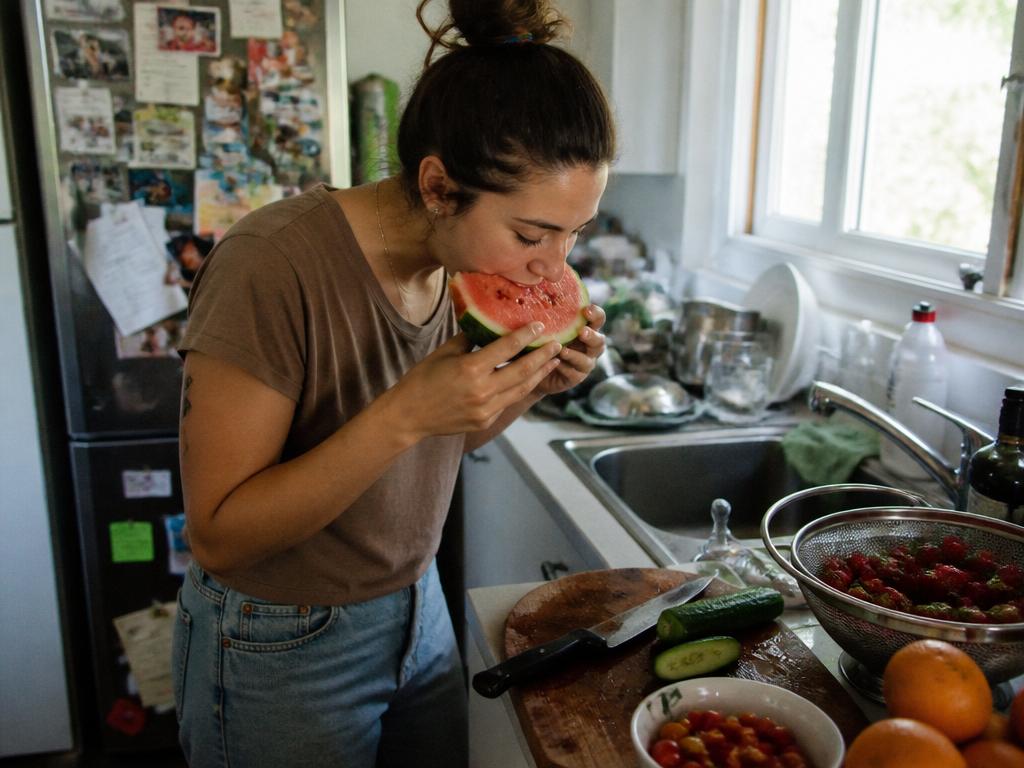
If remembering to drink is a losing battle on your busiest days, here is some good news: a real portion of your hydration can arrive on a fork. Many everyday foods are mostly water, and they quietly top you up while you are simply eating lunch.
Top water-rich foods
Plenty of foods — especially fruits and vegetables — are composed largely of water. Leaning on them is an easy, low-effort way to support your fluid intake without thinking of it as “drinking.”
Some of the most water-dense options:
- Cucumber, lettuce, and celery — among the most water-heavy vegetables there are, and ideal for crunchy snacks and salads.
- Watermelon, melon, and strawberries — refreshing fruits that are mostly water.
- Tomatoes, bell peppers, and zucchini — versatile, water-rich vegetables that slot into almost any meal.
- Oranges, grapefruit, and other citrus — juicy fruit that hydrates while it satisfies a sweet craving.
- Broth-based soups — close to entirely fluid, and a warm way to hydrate.
- Yoghurt — high in moisture with the bonus of some minerals.
| Food | Hydration role |
|---|---|
| Cucumber, lettuce, celery | Very high water; great raw |
| Watermelon, melon, berries | Sweet, water-dense fruit |
| Tomatoes, peppers, zucchini | Easy to add to meals |
| Citrus fruit | Juicy and refreshing |
| Broth-based soup | Almost all fluid |
| Yoghurt | Moisture plus minerals |
The pattern is clear: build meals and snacks around fresh produce and brothy dishes, and you are hydrating with nearly every bite.
How much fluid food really provides
It is reasonable to wonder whether food’s contribution is a rounding error or something that genuinely counts. The answer is that it counts — meaningfully. National guidelines on fluids generally fold in the water you get from food, precisely because it is a real share of the total for most people, not a token amount.
A few honest points to keep it in perspective:
- It is a share, not the whole. Food contributes a genuine portion of your daily fluids, but for most people it complements drinks rather than replacing them entirely.
- The amount depends on what you eat. A diet rich in produce, yoghurt, and soups delivers far more food-water than one built on dry, processed staples.
- You do not need to count it. The point is not to tally millilitres from your salad. It is to recognise that eating well takes real pressure off the “must drink water” treadmill.
So if you have had a water-heavy lunch and a couple of pieces of fruit, you are further along on hydration than a glass count alone would suggest. This is also why people who eat lots of fresh food often stay well hydrated on less obvious drinking.
Building hydrating snacks into a day
The practical move is to make water-rich food the default choice when you are reaching for something anyway, so hydration happens passively across your day.
Easy ways to fold it in:
- Snack on crunchy produce. Keep cucumber, cherry tomatoes, pepper strips, or celery within reach for grazing.
- Default to fruit. Reach for an orange, berries, or a wedge of melon instead of a dry, salty packet.
- Add a brothy starter. A cup of soup before a meal both hydrates and takes the edge off hunger.
- Make salads water-heavy. Build them on cucumber, lettuce, and tomato rather than only dense ingredients.
- Use yoghurt as a base. Pair it with fruit for a snack that brings both moisture and minerals.
A few closing notes for real life:
- Food complements drinking; it does not abolish it. You will still want to drink to thirst, especially in heat, during exercise, or when you are unwell — situations where food-water alone will not keep pace.
- Hydrating foods do double duty. They tend to be the kind of choices that leave you steadier and better-fuelled than processed snacks, beyond just the fluid.
- Honour your own needs. Requirements shift with activity, your cycle, midlife, and pregnancy — and if pregnancy or a health condition is in the picture, let your clinician guide your overall intake.
The bottom line
A surprising amount of hydration comes from what you eat: fruits, vegetables, soups, and yoghurt are largely water and genuinely count toward your daily fluids, which is why guidelines include them. Make water-rich foods your default snack and build meals around produce and brothy dishes to hydrate passively on busy days. Keep drinking to thirst too — especially in heat, exercise, or illness — and tailor your overall intake with your clinician if pregnancy or a health condition applies.