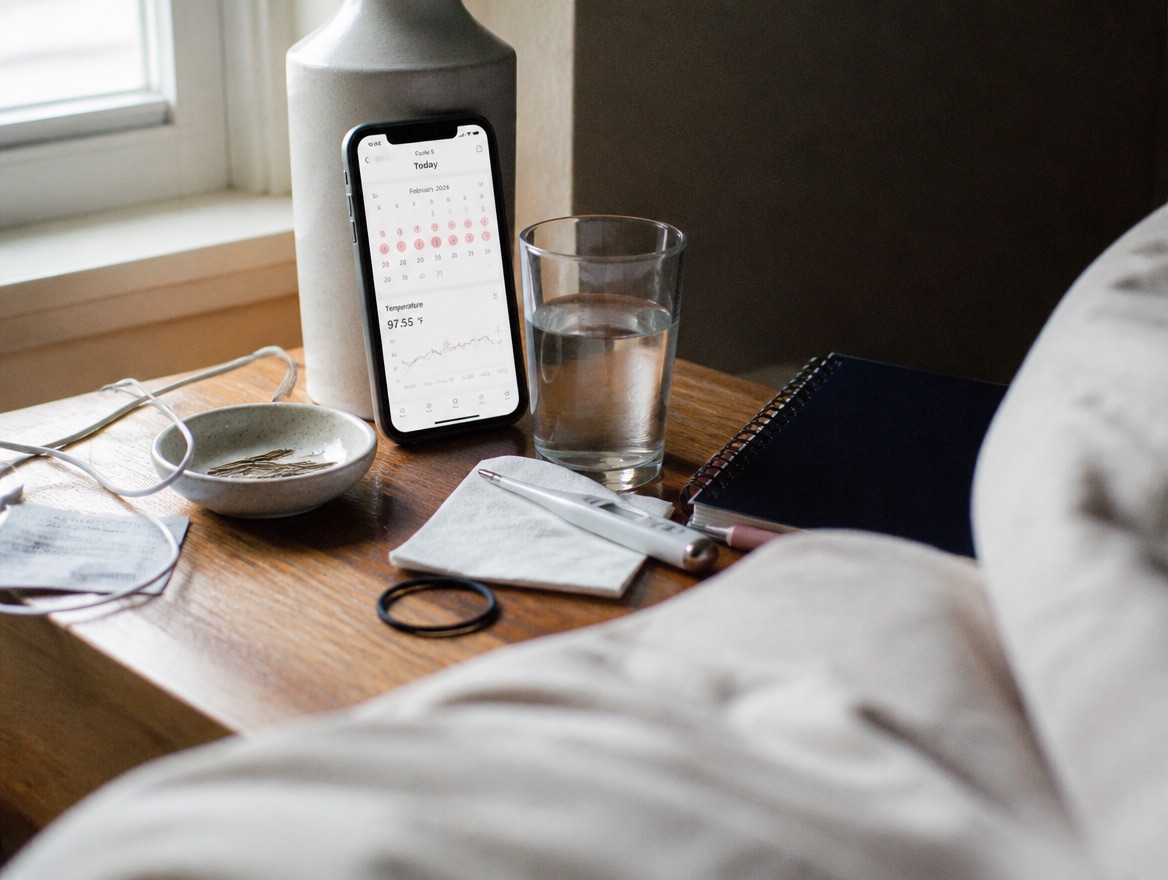
Perimenopause Insomnia and the 3 A.M. Water Glass
How hot-flash-disrupted sleep changes overnight fluid balance in perimenopause, and a simple bedside routine that works with broken sleep instead of against it.
Somewhere in perimenopause, a lot of women meet the same hour: wide awake at 3 a.m., damp under the covers, mouth dry, mind already running. If that has become a familiar stretch of your night, the hydration piece of it is more explainable than it feels in the moment.
Why perimenopause disrupts sleep in the first place
Perimenopause is the transition leading up to menopause, marked by declining and increasingly erratic estrogen and progesterone. That hormonal instability touches sleep through more than one route.
- Hot flashes and night sweats are the most direct culprit — a surge of heat and sweating that can wake you outright or fragment sleep without full waking.
- Progesterone has a calming, sleep-supportive effect for many women, and its decline during this transition can make sleep lighter and more easily broken.
- Mood and anxiety shifts, common in perimenopause, can independently make it harder to fall back asleep once awake — so a single 3 a.m. wake-up can turn into an hour of staring at the ceiling.
The net effect is sleep that is shorter, more fragmented, and — critically for hydration — often interrupted by real fluid loss through sweat.
What a sweat-soaked night actually costs you
A night sweat is not just discomfort; it is fluid leaving your body while you are asleep and unable to replace it. Depending on how many flashes you have and how severe they are, that loss can be genuinely worth accounting for by morning.
A few things worth understanding:
- You cannot rehydrate while you sleep, so a bad night stacks a real deficit that is still there when you wake, regardless of how the rest of your day goes.
- Waking dehydrated compounds the grogginess perimenopause already brings — dry mouth, headache, and a foggy, wrung-out feeling can all overlap with ordinary sleep-deprivation symptoms, making it hard to tell which is which.
- The pattern tends to repeat. Women who track their nights often notice their worst mornings follow their sweatiest nights, which is a useful, personal signal even without any formal measurement.
Building a bedside setup that works with broken sleep
The goal here is not to fight insomnia with hydration — water will not fix perimenopausal sleep on its own — but to make sure the fluid side of a disrupted night is handled with as little friction as possible, since fumbling for a bottle at 3 a.m. is the last thing a half-awake brain wants to manage.
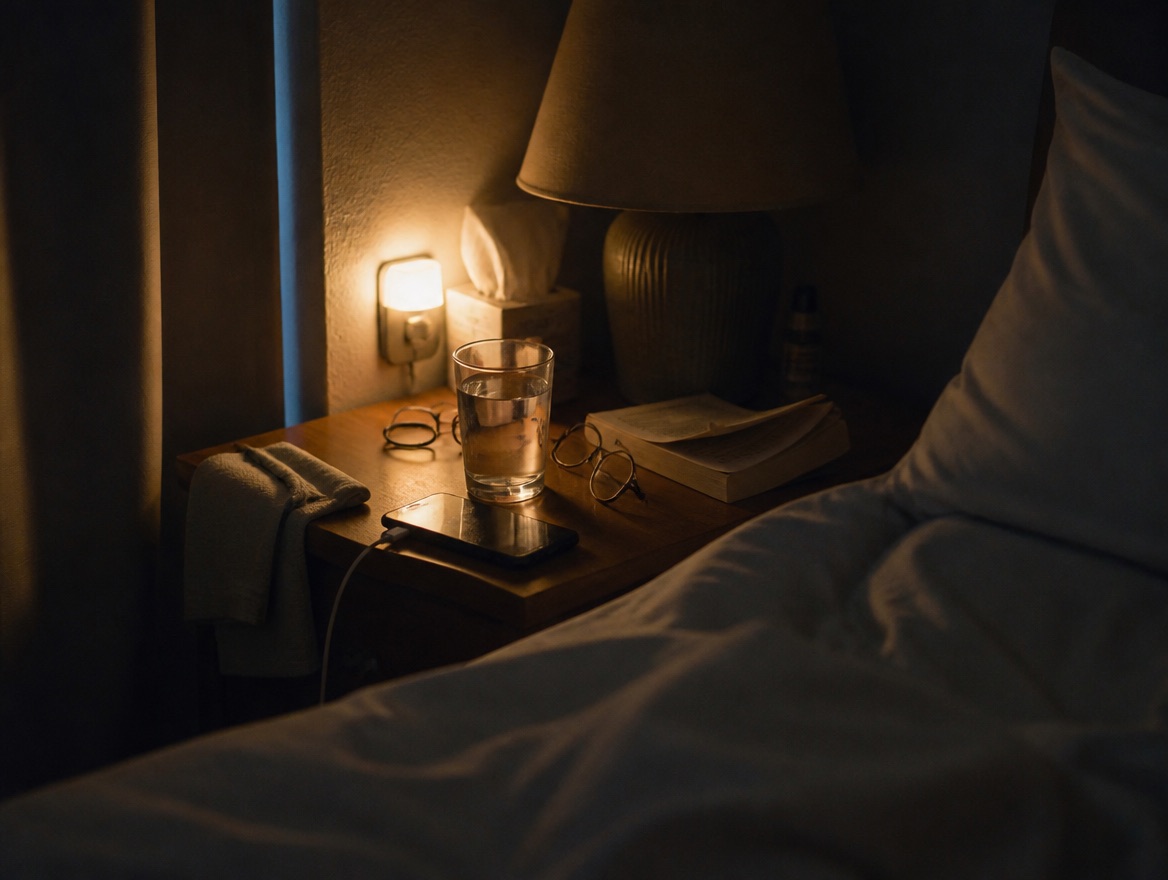
A simple nightstand setup that a lot of women land on:
- A full glass or small carafe of room-temperature water, placed within arm’s reach before you turn off the light — cold water at 3 a.m. can feel like a jolt when you are trying to drift back off.
- A dim, low light source — a small plug-in nightlight or your phone screen turned all the way down — so a wake-up-and-sip doesn’t turn into a fully alert 20 minutes of scrolling.
- Something breathable on the bed — a moisture-wicking or all-cotton sheet set and a spare, lighter layer folded at the foot of the bed — so a soaked night sweat can be addressed (a shirt change, a flipped pillow) without a full production.
- A folded hand towel nearby, which sounds minor until you have used one at 3 a.m. instead of stripping the whole bed.
None of this needs to be elaborate or expensive. The point of a fixed setup is that a half-asleep brain does not have to make decisions — it just reaches for what is already there.
The morning-after routine
However the night went, morning is your real opportunity to close the gap.
| Night pattern | Likely fluid status by morning | Morning move |
|---|---|---|
| Slept through | Roughly normal | Hydrate as usual with breakfast |
| One or two flashes | Mild deficit | A glass of water before coffee |
| Multiple soaked wake-ups | Meaningful deficit | Two glasses of water, go easy on caffeine early |
A few habits that help:
- Rehydrate before your first coffee, not after — caffeine will do more for alertness once you are not starting from behind on fluid.
- Keep a water bottle visible in the kitchen so the first thing you see after a rough night is an easy way to catch up, not a decision to make.
- Notice your own pattern over a few weeks rather than treating any single night as evidence of anything. Perimenopausal sleep is genuinely variable.
When to loop in your clinician
Occasional disrupted sleep is part of this transition for many women, but persistent insomnia, hot flashes that are frequent or severe enough to derail daily life, or a mood shift that feels bigger than “a bit off” are all reasons to talk to your own clinician. There are real, effective options for vasomotor symptoms and sleep in perimenopause — hormone therapy among them for appropriate candidates — and a hydration routine, however well designed, is not a substitute for treating the underlying cause.
The bottom line
Perimenopausal insomnia and night sweats create a genuine overnight fluid deficit that a good bedside setup can soften but not erase. Keep water, a dim light, and breathable bedding within reach before you turn in, rehydrate deliberately the next morning, and treat a pattern of severe or disruptive nights as a conversation for your clinician rather than something to just wait out.