Reading a Cycle Tracker for Hydration Cues
How to turn the basal temperature, mood, and phase data already in your cycle-tracking app into a simple, non-obsessive weekly drinking pattern.
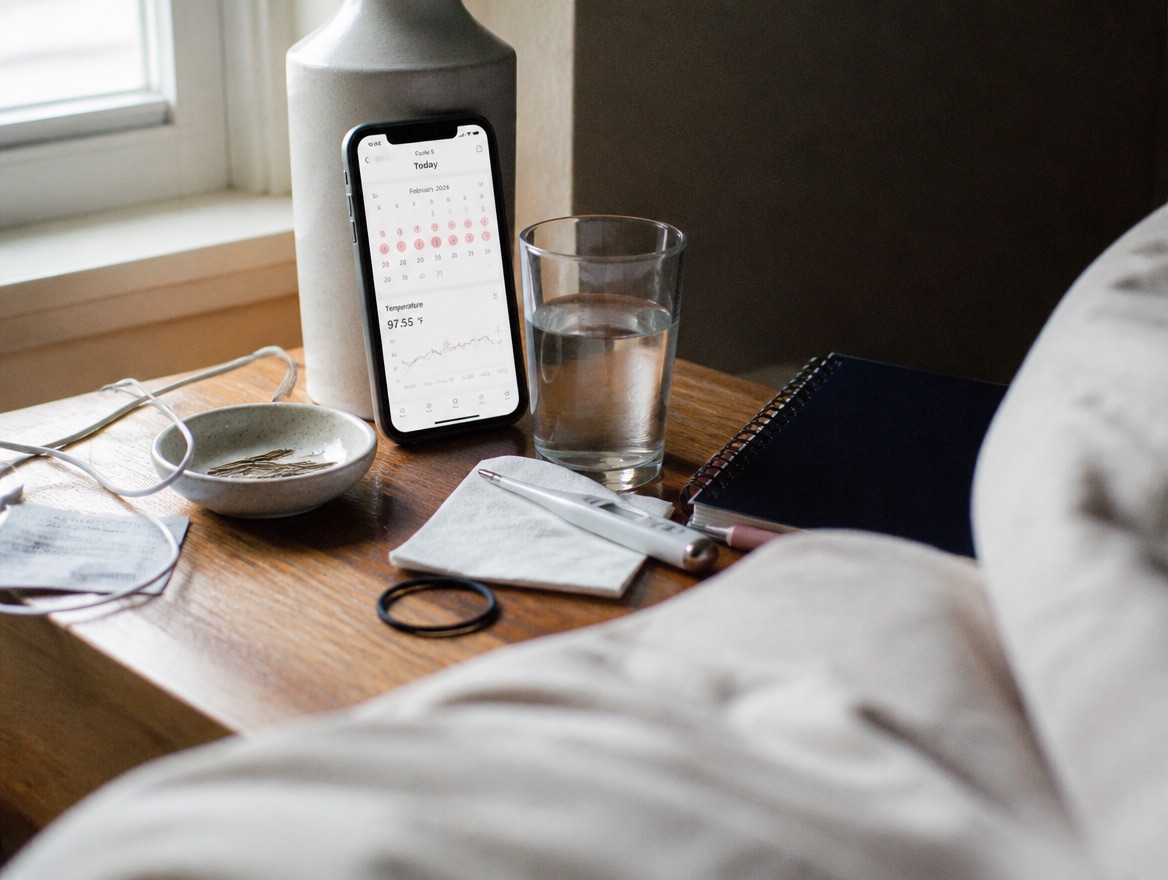
If you already log your cycle — period dates, basal temperature, symptoms, mood — you are sitting on more hydration-relevant data than most tracking apps ever surface. None of it requires a new habit. It just requires reading what is already there a little differently.
What your tracker already knows about your fluid needs
Most cycle-tracking apps collect a handful of data points that, stacked together, sketch a rough map of your monthly fluid needs — even though “hydration” is rarely a field they explicitly ask about.
- Basal body temperature typically rises slightly after ovulation and stays elevated through the luteal phase. A sustained higher baseline temperature is a small, real increase in your metabolic and cooling demands, which can nudge fluid needs up.
- Logged symptoms like bloating, breast tenderness, or “puffy” cluster in the luteal phase for a lot of women and reflect the fluid-retention pattern driven by progesterone — a signal that more water, not less, tends to help this specific kind of puffiness.
- Mood and energy entries often dip in the days before a period, and low energy is exactly when people are most likely to forget to drink enough — worth flagging to yourself as a low-hydration-vigilance window.
- Period start dates, the most basic input of all, tell you when fluid loss from menstrual bleeding begins, a straightforward, if modest, addition to normal fluid needs.
Turning the data into a weekly pattern
You do not need a new app or a complicated dashboard. A simple weekly read of what you are already logging is enough to build a loose hydration rhythm around your cycle.
| Phase (by tracker data) | What the data typically shows | Hydration cue |
|---|---|---|
| Menstrual (period logged) | Bleeding; possible fatigue entries | Drink steadily; rest as needed |
| Follicular (post-period, pre-temperature rise) | Lower basal temp; often more energy logged | Hydrate to thirst as usual |
| Ovulatory (temperature starting to climb) | Estrogen peak; some log increased thirst or appetite | Keep water visibly within reach |
| Luteal (sustained higher temp) | Bloating, breast tenderness, lower mood commonly logged | Stay hydrated, ease up on salt, expect some puffiness |
A few notes on applying this without overthinking it:
- Let the temperature shift, not the calendar, anchor your phases if you track basal temperature — it is more accurate to your actual cycle than a generic day-count, especially if your cycle length varies.
- Treat logged symptoms as hydration reminders, not diagnoses. A string of “bloated” and “tired” entries is a nudge to keep water accessible, not a medical finding.
- Review monthly, not daily. Looking back at a full cycle’s worth of entries reveals patterns that a single day’s data cannot.
A five-minute monthly review
Once a month, scroll back through your tracker with hydration specifically in mind:
- Did thirst or fatigue entries cluster in a particular phase? If you log free-text notes, search them for “thirsty,” “dry,” or “tired” and see where they fall.
- Did bloating entries line up with the days you also felt lowest on energy? That overlap is your personal luteal-phase signature, and it is worth planning around next month rather than being surprised by it again.
- Was there a stretch where you skipped logging entirely? That is often also a stretch where self-care basics like hydration slipped — worth noticing as a pattern in itself.
What the tracker cannot tell you
A cycle app is a useful mirror, not a diagnostic tool, and it is worth being honest about where its usefulness ends.
- It cannot tell you that you are dehydrated. Urine color, thirst, and how you actually feel remain the more direct signals; the tracker only helps you anticipate when you might need to pay closer attention.
- Symptom logging is subjective and inconsistent day to day, so treat patterns across several cycles as more reliable than any single month’s entries.
- Severe or worsening symptoms — debilitating bloating, headaches, mood changes that disrupt your life — are a reason to talk to a clinician, not a hydration pattern to keep monitoring on your own indefinitely.
Keeping it simple
The point of this exercise is not to add another layer of self-monitoring to your life. It is to notice that the data you are probably already collecting — temperature, symptoms, period dates — already tells a fairly clear hydration story once you know what to look for. A glass of water within reach during your luteal-phase window, a bit more attention on days you have logged as low-energy, and steady drinking the rest of the month covers most of what the tracker has to offer here.
If your app has a hydration field
A handful of cycle trackers now include an optional water-intake log alongside symptoms and temperature. If yours does, it can be genuinely useful — but only if you actually fill it in consistently, since a sporadically logged number is closer to noise than data. If tapping in an ounce count every day feels like one more chore, a simpler proxy works nearly as well: note urine color once a day, first thing in the morning, and let that single entry stand in for a whole day’s hydration status.
The bottom line
Your cycle tracker already contains the raw material for a simple hydration rhythm: basal temperature signals a modestly higher fluid need after ovulation, and logged bloating or fatigue point to the luteal-phase window where staying hydrated and easing off salt tends to help most. Read it monthly rather than daily, use it to anticipate rather than diagnose, and bring any severe or disruptive symptoms to your clinician rather than trying to track your way out of them.