Ovulation Week Thirst: Why Some Women Drink More Mid-Cycle
Why thirst can spike around days 12–16 of the cycle, what the estrogen peak has to do with it, and how to respond without overthinking a normal signal.

If you have ever noticed you are reaching for water more often around the middle of your cycle — a day or two before you would expect any midcycle twinge — you are picking up on something real. Thirst is not static across the month, and the days surrounding ovulation are one of the more noticeable shifts.
What actually happens around days 12–16
For a cycle that runs close to 28 days, ovulation tends to land somewhere in this window, though the exact timing varies widely between women and even cycle to cycle in the same woman. In the run-up to it, estrogen climbs to its highest point of the month.
Estrogen does more than support ovulation. It also interacts with the systems that regulate fluid balance, including some influence on the hormones that manage how much water your kidneys hold on to versus release. Researchers who study thirst and fluid regulation across the menstrual cycle have observed that this window — high estrogen, low progesterone, right before the egg releases — tends to line up with reports of increased thirst and drinking in some women.
A few things worth keeping straight:
- The estrogen peak is brief. It rises sharply in the days before ovulation and drops again shortly after, so a thirst shift here tends to be a short window, not a month-long pattern.
- Not every woman notices it. Individual sensitivity to these hormonal shifts varies a lot, and plenty of women feel no particular difference around ovulation.
- It is distinct from luteal-phase bloat. The retention and puffiness many women describe in the week before their period is a different hormonal picture — driven more by the progesterone-dominant second half of the cycle — and is not the same phenomenon as ovulatory thirst.
Why the body might ask for more water here
The physiology is not fully settled, but a reasonable working explanation involves basal body temperature. Many women’s core temperature rises slightly after ovulation, a shift used in fertility-awareness methods to help pinpoint when ovulation happened. Some researchers think the metabolic and hormonal activity around the ovulatory window — not just the temperature bump itself — may nudge fluid needs upward.
It is also worth noting that some people report other cycle-linked shifts in the same window: appetite changes, slightly different energy levels, or increased awareness of cervical mucus changes as estrogen peaks. Thirst may simply be one more signal your body is more actively regulating during a hormonally busy few days.
None of this means you need to force down extra water you do not want. It means that if you notice yourself naturally drinking more around day 12 to 16, that is a plausible and unremarkable hormonal pattern, not a sign anything is wrong.
Sodium plays a supporting role here too. As the body juggles slightly higher fluid intake with the small hormonal shifts of the ovulatory window, adequate sodium helps water actually get where it is needed rather than passing straight through. This is not a case for a special mid-cycle supplement — it is a case for not obsessively cutting salt during a week your body may already be asking for a bit more fluid than usual.
A simple way to respond
You do not need a spreadsheet to work with this. A loose, low-effort approach tends to serve better than a rigid one:
| Cycle stage | What some women notice | A reasonable response |
|---|---|---|
| Follicular (post-period) | Fairly steady thirst | Drink to thirst as usual |
| Approaching ovulation | Estrogen peaks; some feel thirstier | Keep water within reach; don’t ignore it |
| Ovulation | Possible mild temperature rise | Continue drinking to thirst |
| Luteal | Progesterone rises; puffiness for some | Stay hydrated; ease up on very salty food |
A few practical notes:
- Drink to thirst rather than a fixed number. Thirst is a genuinely useful signal in healthy adults, and honoring it across the cycle is usually simpler than trying to pre-plan your intake by day.
- Keep water visibly accessible during the days you expect ovulation, especially if you track cycle phase and know roughly when that window falls for you.
- Notice your own pattern over a few cycles rather than assuming this applies to you from a single article. Individual variation here is large.
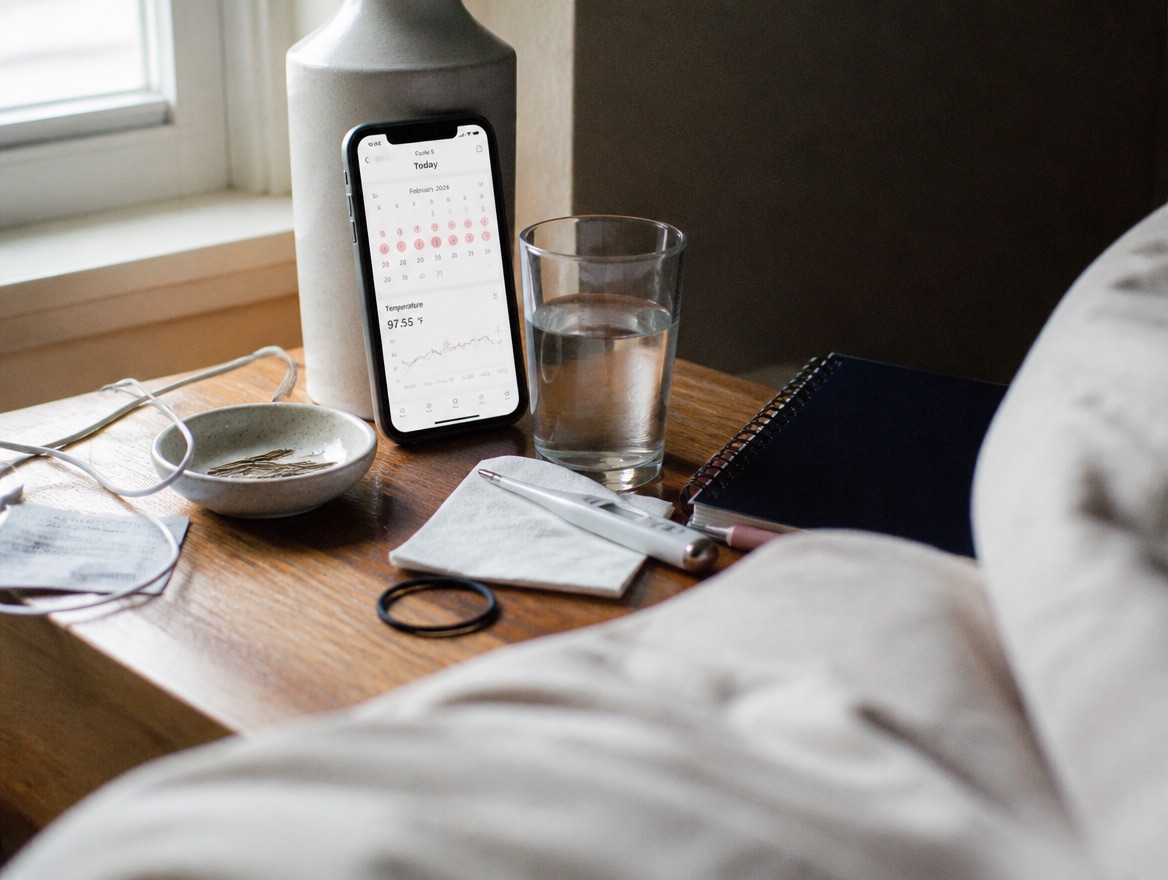
If you are using fertility-awareness methods and tracking basal temperature or cervical mucus alongside thirst, an uptick in water intake around your temperature shift can be one more small data point — interesting, but not something to chase or worry about on its own.
When it is more than ordinary thirst
Ordinary ovulatory thirst is mild and short-lived. It is worth mentioning to your clinician if you notice thirst that is extreme, constant regardless of cycle phase, accompanied by very frequent urination, unexplained weight change, or persistent fatigue — those patterns can point to something unrelated to your cycle, such as blood sugar regulation, and deserve a proper look rather than a hydration fix.
The bottom line
A mild thirst uptick around days 12 to 16 of the cycle is a plausible, hormone-linked pattern tied to the estrogen peak that precedes ovulation, and it is distinct from the fluid retention many women feel later in the luteal phase. There is no need to engineer your intake around it — simply keep water within reach, drink to thirst, and get to know your own monthly pattern. If thirst ever feels extreme or out of step with your cycle, that is a conversation for your clinician, not a hydration tweak.